Willonaline: A Handwritten Font That Makes Your Brand Feel Human
It was a Tuesday morning—coffee half cold, label printer humming—and I was staring at the latest batch of soy wax candle jars for my small-batch shop. The scent names were perfect (“Honey & Hearth,” “Rain on Cedar”), but the labels? Flat. Generic. Like they’d been pulled from a free font library and slapped on without a second thought. Customers loved the candles—but I kept hearing, “Your packaging feels like it’s missing something.” That “something” turned out to be Willonaline.
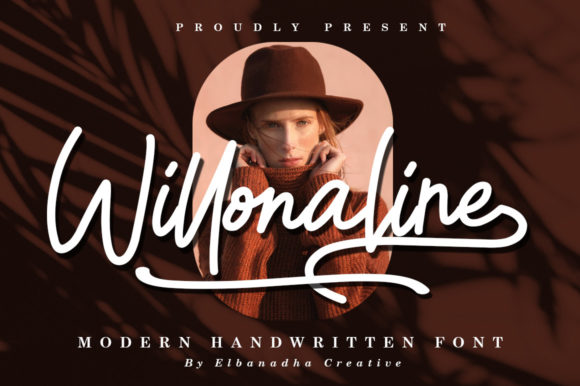
Willonaline is a script font that doesn’t try too hard. It’s simple, modern, quirky—and quietly elegant. Not fussy or overly ornate, not stiff or robotic. Just warm, confident handwriting with gentle curves, open spacing, and just enough personality to feel intentional. Think of it as the kind of handwriting you’d use to write a note on a gift tag—not a formal letter, not a doodle, but something sincere and memorable.
I started small: swapping out the sans serif headline on my thank-you cards for Willonaline. Instant difference. Suddenly, the card didn’t just say “Thanks”—it *felt* like a personal note from me. Then came the product labels. On matte black candle jars, Willonaline in soft cream stood out cleanly without shouting. On kraft paper soap wraps? Equally charming—soft, approachable, handmade in spirit but polished in execution.
What makes Willonaline work so well for real small businesses isn’t just how it looks—it’s how it *behaves*. It’s designed as a display font, meaning it shines brightest in short bursts: logo lockups, product names, menu headers, social media quotes, banner text, and packaging titles. It’s not meant for long paragraphs (no script font is), but that’s exactly why it works so well for branding—it draws attention where it matters most.
On Instagram, I used Willonaline for quote graphics and story highlights. Paired with a clean sans serif like Montserrat or Inter for body text, it created instant visual hierarchy—friendly but focused. For printed menus at my weekend pop-up café stall, I set coffee names in Willonaline and descriptions in a light-weight serif. Customers paused longer. Told friends. Took photos. Typography *does* that—when it feels human, people lean in.
Readability was never an issue—even on tiny 1.5-inch sticker labels or mobile-first social thumbnails. Willonaline’s generous x-height and open counters keep letters legible at smaller sizes, and its consistent rhythm avoids visual clutter. No squinting. No misreading “O” for “0” or “l” for “1.” Just clarity with charm.
Pairing it was effortless. With a friendly sans serif (like Poppins or Lato), it adds warmth without sacrificing professionalism. With a refined serif (think Playfair Display or Cormorant Garamond), it balances elegance and ease. I even tested it alongside another handwritten font once—just to see—and quickly backed away. Willonaline holds its own. It doesn’t compete; it complements. That’s rare in the script font world.
Before committing, I double-checked what was included: OTF and WOFF files, standard and discretionary ligatures, stylistic alternates, and full Latin character support—including accented characters for common European languages. Crucially, it’s licensed for commercial use: product packaging, digital templates, client projects, merch, and online shop graphics. As a solo maker selling through Etsy and local markets, that peace of mind mattered. No surprises at launch—just smooth, legal, beautiful implementation.
One thing I didn’t expect? How much consistency it brought across touchpoints. My business cards, jar labels, Instagram banners, and email headers now share the same typographic heartbeat. Customers don’t always notice fonts consciously—but they *feel* the cohesion. That quiet confidence builds trust. It tells people, “This brand knows itself. It cares about details. It’s worth remembering.”
Willonaline isn’t flashy—but it’s thoughtful. It’s not loud—but it’s present. And for small businesses building identity from scratch—or refining what’s already working—it’s one of those rare design assets that does heavy lifting without drawing attention to itself. It supports your voice instead of overshadowing it.
If you’re updating packaging for your herbal tea line, redesigning skincare labels, refreshing your coaching brand’s website headers, or simply choosing a font for your next batch of greeting cards—try Willonaline. Not as a trend, but as a tool: a handwritten font that helps your business look more like *you*, and less like everyone else.
Because in a world of algorithm feeds and fast-scrolling feeds, authenticity isn’t just nice to have—it’s what makes people stop, remember, and come back. And sometimes, that starts with the shape of an “a.”
- Perfect for logos, product names, and packaging titles
- Works beautifully on labels, stickers, menus, and social graphics
- Pairs naturally with clean sans serifs or classic serifs
- Includes commercial licensing, ligatures, and multilingual support
- Part of the Script Amp collection—curated for expressive, adaptable branding